Tracing vs. Free Writing: When to Make the Switch
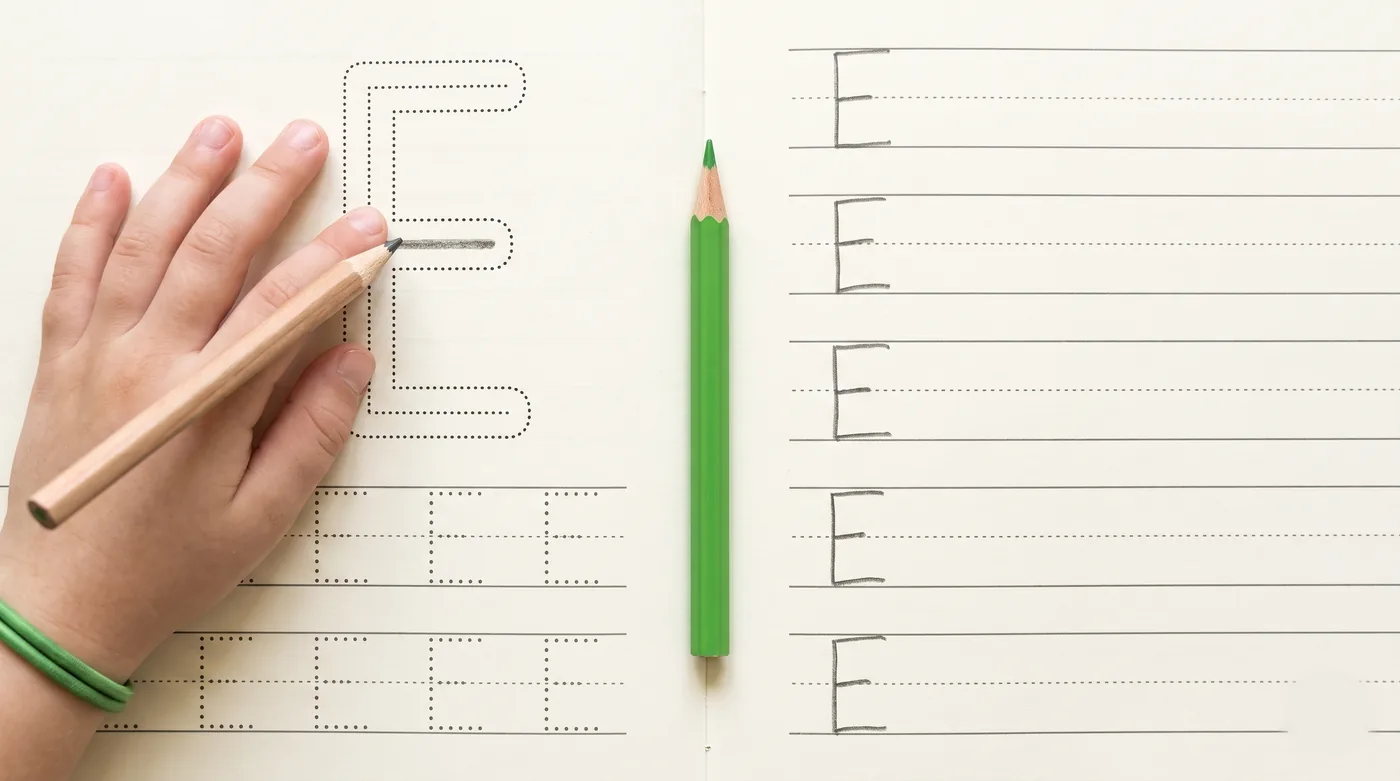
In tracing vs. free writing, tracing comes first because it builds the muscle memory and letter shapes a child needs before writing alone. Switch to free writing when your child can trace letters smoothly, stay on the lines, copy a letter without a guide, and shows they want to try on their own. Move gradually, not all at once.
TL;DR
- Tracing comes first: it builds muscle memory and correct letter shapes.
- Free writing comes next: it builds recall and independence.
- Neither is better, they are stages in the same journey.
- Watch for 6 readiness signs, then fade the guides gradually.
- Trace-then-write keeps both on one page so the switch is smooth.
Almost every parent of a new writer hits the same question: is my child tracing too long, or are they ready to write on their own? The honest answer to tracing vs free writing is that it is not a contest. Tracing first is correct, not a crutch, and the switch is a gradual bridge rather than a single leap.
This guide covers why tracing comes first, whether it is actually good for handwriting, the six signs your child is ready, and how to fade the guides without frustration.
Why does tracing come first?
Tracing comes first because it builds muscle memory and teaches correct letter formation before a child has to recall a shape from memory. Following a dotted midline and a solid baseline trains size, placement, and stroke direction all at once. It lets the hand rehearse the motion while the brain is still learning the letter.
◆ VERIFIED: Finger tracing is an established early-writing strategy for teaching pre-writing lines, shapes, and letter formation. Source: The OT Toolbox, Letter Formation
The same principle drives the Montessori method, where children trace textured sandpaper letters with their fingers so the hand learns the shape before a pencil is ever involved [2].
What tracing teaches, and what it does not
Tracing builds the motor pattern and the shape, but it does not build recall on its own. A child can trace a neat A and still not be able to write one from memory yet. That gap is exactly why free writing is the next step, not a replacement for tracing.
There is one catch worth knowing. The OT Toolbox notes that children handed tracing worksheets without prompts or correct-formation cues often trace letters starting in the wrong places, which can be a hard habit to break [1]. Guided tracing with a clear start point is what makes tracing work.
Is tracing good for handwriting?
Yes, tracing is good for handwriting as a stage. It builds motor control, correct letter shape, line awareness, and spacing, and it gives a hesitant child the confidence to make marks without fear of getting it wrong. The key is that tracing is guided practice and a first step, not the whole journey.
- Motor control. The hand rehearses the exact path of each letter.
- Letter shape. The child sees and feels the correct form.
- Line awareness. Guide lines train size and placement.
- Spacing. Repeated rows build a feel for even gaps.
- Confidence. Success on the first try keeps a child willing to practice.
Want a no-cost way to practice tracing today? Our free Activity Pages for Toddlers, 26 tracing pages plus 26 coloring pages, are a gentle place to start.
What are the 6 signs your child is ready for free writing?
Your child is likely ready for free writing when they show a few of these six signs: smooth tracing without tiring, staying near the lines, copying a letter beside a model without tracing over it, recognizing most letters, asking to write without the dots, and writing a few letters of their name from memory.
- Traces letters smoothly without heavy hand fatigue.
- Stays on or near the baseline and midline.
- Copies a letter beside a model without tracing over it.
- Recognizes and names most letters.
- Asks to write without the dots, or fills the guide too fast.
- Can write a few letters of their name from memory.
When a few of these appear, it is time to start blending in free-write rows alongside the tracing.
How do you bridge tracing and free writing?
Bridge tracing and free writing by fading the guides slowly rather than removing them all at once. Have your child trace a letter, then copy the same letter on a blank row beside it. Move from full dotted letters, to a few start dots, to a blank line with just the baseline, and start with their name and favorite words.
| Tracing | Free writing | |
|---|---|---|
| What it builds | Muscle memory, correct shape, line awareness | Recall, independence, real writing |
| When it helps | First, and for new or tricky letters later | Once a child can copy a letter without a guide |
| The risk | Passive tracing without cues can set wrong habits | Starting too early causes frustration and reversals |
| Best together | Trace the letter, then write it on a blank row | The trace-then-write bridge |
Keep the steps small. The goal is a child who barely notices the guides disappearing.
When should you stop tracing letters?
There is no fixed age to stop tracing letters. Begin blending in free writing once your child traces smoothly, stays near the lines, and can copy a letter without tracing over it. Keep tracing available for brand new letters, for cursive later, and for letters they tend to reverse, because it stays a useful tool, not a phase to ban.
A comfortable grip makes all of this easier, so it is worth checking how to hold a pencil before you push independent writing. The whole sequence, from grip to first words, is mapped in our gentle 5-step plan for teaching writing.
What format bridges tracing and free writing?
The format that bridges tracing and free writing is trace-then-write: a child first traces a guided letter, then writes the same letter on a blank row beside or below it. Putting guided rows and blank rows on one page lets a child move up gradually, without a parent juggling two separate stacks of sheets.
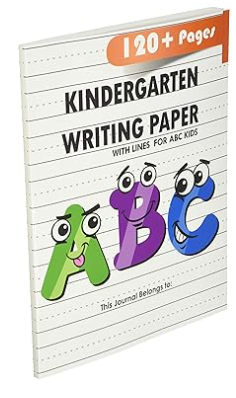
That is the design of our trace-then-write kindergarten book: dotted midline plus solid baseline, guided rows followed by blank rows, 122 pages for ages 4 to 6, rated 4.8 from 12,478 families. One parent, RM, shared that her Pre-K daughter’s occupational therapist suggested home practice, adding that it “helps her focus on letter structure and spacing.” A cover-bound book keeps tracing and writing in one place, which loose printables, all-tracing or all-blank, cannot. We break down loose printables versus a bound book if you are deciding between the two.
What do parents ask about tracing and writing?
Below are the questions parents ask most about tracing and free writing, with short, practical answers. They cover whether tracing helps, when a child should stop tracing, whether tracing is better than free writing, how long to trace before switching, and what the trace-then-write format actually means.
Does tracing help handwriting?
Yes. Tracing builds muscle memory, teaches correct letter formation, and trains a child to keep letters the right size and on the line. It is the recommended first stage because it lets a child practice the shape before they have to recall it from memory.
When should a child stop tracing letters?
There is no fixed age to stop. Begin blending in free writing when your child can trace smoothly, stay near the lines, and copy a letter without tracing over it. Keep tracing available for new or tricky letters even after they start writing independently.
Is tracing better than free writing?
Neither is better, they are stages. Tracing builds the motor pattern and shape first, and free writing builds recall and independence next. The most effective practice moves a child from one to the other gradually rather than choosing only one.
How long should a child trace before writing on their own?
It depends on the child, not a set number of weeks. Watch for the readiness signals: smooth tracing, staying on the lines, and copying a letter without a guide. When a few of those appear, start mixing in blank rows.
What is trace-then-write?
Trace-then-write is a practice format where a child first traces a guided letter, then writes the same letter on a blank row beside or below it. It bridges tracing and independent writing on a single page so the child moves up gradually.
Sources and references
- “Letter Formation Activities and Tools That Work.” The OT Toolbox. https://www.theottoolbox.com/letter-formation/
- “Indirect Preparations for Handwriting.” Association Montessori Internationale. https://montessori-ami.org/trainingvoices/indirect-preparations-handwriting
Written by Smith John, founder of Tiny Writers Co and author of “Kindergarten Writing Paper with Lines for ABC Kids.” This guide is general education, not medical advice. Developmental details come from the named sources above. If you have concerns about your child’s writing, speak with a teacher, pediatrician, or pediatric occupational therapist.
Ready for daily practice?
Our bound handwriting book gives 122 pages of trace-then-write practice for ages 4 to 6. Rated 4.8 by 12,478 families.