How to Hold a Pencil Correctly: The Tripod Grip for Ages 3 to 6
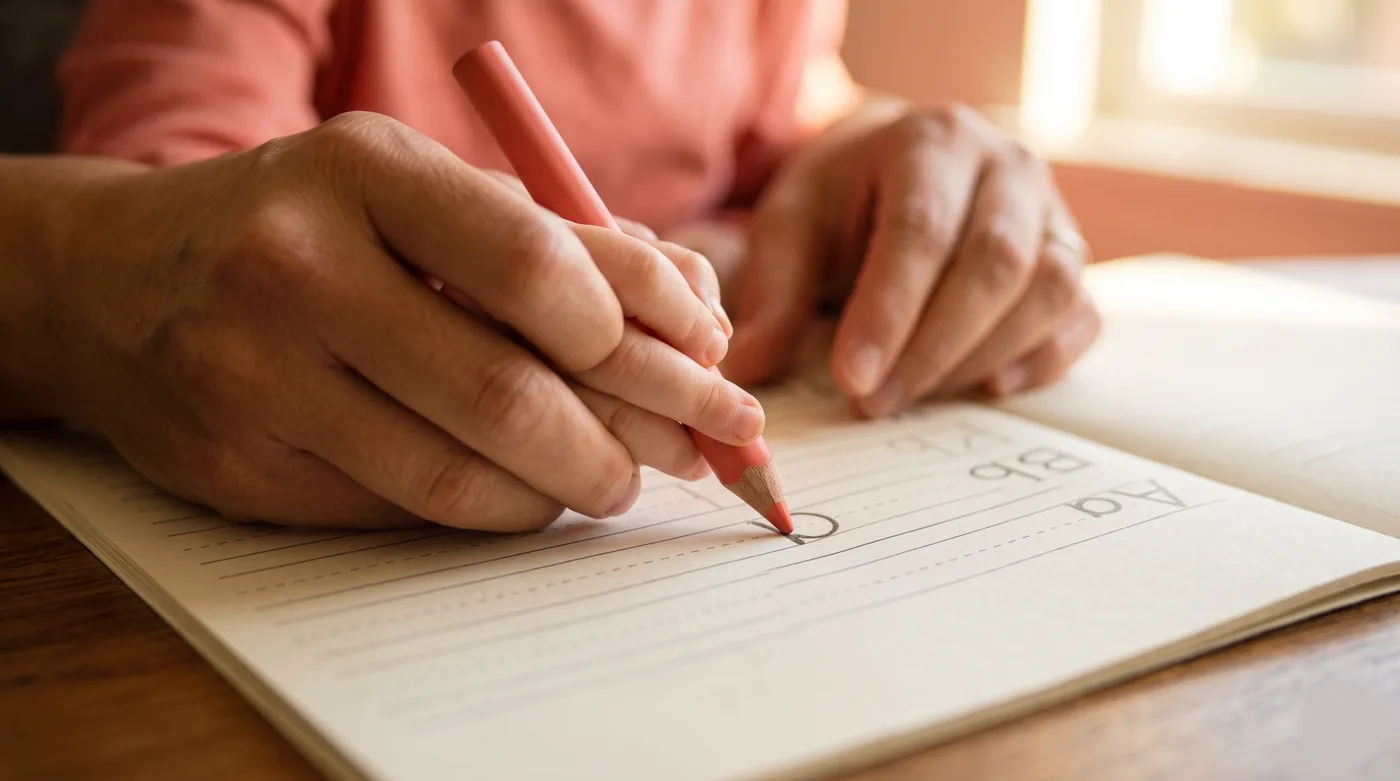
The correct way to hold a pencil is the tripod grip: the pencil rests on the middle finger while the thumb and index finger pinch it near the tip, about an inch from the point. The hand stays relaxed and the fingers move, not the whole arm. Most children settle into this grip between ages 4 and 6.
TL;DR
- How to hold a pencil correctly: the tripod grip, thumb and index finger pinching near the tip.
- Grip develops in stages, from a toddler fist to a mature three-finger hold.
- A “wrong” grip at age 3 is usually a normal stage, not a problem.
- Short, daily practice beats long sessions for building a comfortable grip.
- Function matters more than looks: relaxed, legible, and pain-free is a good grip.
If you have been wondering how to hold a pencil correctly, the good news is that grip develops in a predictable order, and a fist-hold at age 3 is not a red flag. This guide covers what the correct grip looks like, how it develops, how to teach it, simple fixes, and when to ask for help.
What is the correct pencil grip?
The tripod grip is a three-finger hold. The pencil is pinched between the thumb and index finger and rests on the middle finger, about an inch from the tip. “Tripod” refers to those three points of contact, which give a child the control needed for neat, comfortable writing.
A good grip has three hallmarks. First, the hand stays relaxed, with no white-knuckle squeezing. Second, the fingers do the moving, not the wrist or the whole arm.
Third, the pencil sits in the open web space, the small gap between the thumb and index finger, rather than being trapped against the palm. The mature goal is the dynamic tripod, where the fingertips make small, controlled movements as the child writes. This differs from a static tripod, where the fingers hold the pencil correctly but the child still moves from the wrist or elbow [1].
How does pencil grip develop by age?
Grip is developmental. It matures in a set order, and rushing it tends to backfire. Knowing the stages is the most reassuring thing a parent can learn here, because most “bad grips” in young children are simply earlier stages that have not finished yet.
◆ VERIFIED: The grasp progression below is drawn from pediatric occupational therapy guidance, not opinion. Source: Heather Greutman, COTA, Growing Hands-On Kids
According to Heather Greutman, a Certified Occupational Therapy Assistant, grip typically moves through four stages [1]:
| Age (typical) | Grip | What it looks like |
|---|---|---|
| 12 to 15 months | Palmar supinate (fisted) | Whole fist around the crayon, movement from the shoulder |
| 2 to 3 years | Digital pronate | Fingers point down the crayon, movement from the elbow |
| 3 to 4 years | Static tripod or quadrupod | Three or four fingers hold the pencil, but the hand moves as a unit |
| 5 to 6 years | Dynamic tripod | The mature grip: three fingers, fingertip movement |
Associates in Pediatric Therapy describes the same four-stage path, with the static tripod appearing around ages 3 to 4 [4]. Sources vary a little on the dynamic tripod, with some placing it anywhere from ages 4 to 7 [2].
The takeaway is the order, not the calendar. A 3 year old gripping a crayon in a fist is on schedule, and a 6 year old still refining the hold is well within the normal range.
How do you teach the tripod grip?
Teaching the tripod grip takes no special equipment, just short, low-pressure practice and a few simple cues. Build the finger shape first, then lay the pencil into it, check the placement near the tip, and keep the hand relaxed throughout. Work in a few minutes at a time, because little and often beats one long, frustrating session.
- Start away from the pencil. Have the child make an “OK” sign, or pinch a small object between the thumb and index finger, so the hand learns the shape first.
- Lay the pencil into that pinch so it rests on the middle finger.
- Check the placement. The fingers should sit about an inch from the point, not choked at the very end and not gripped high up the barrel.
- Watch for tension. A relaxed hand is the goal, so white knuckles mean the child is pressing too hard.
- Keep sessions short. A few minutes of comfortable practice teaches more than twenty minutes of strain.
What are simple fixes for a better grip?
If a grip needs a nudge, these low-cost fixes work because they change the hand position by feel, not by nagging. Most cost little or nothing, and you can try them at the kitchen table today. The goal is always a relaxed three-finger hold, never a forced one that tires the hand.
- Short or broken crayons. A tiny crayon stub forces a pinch, because there is no room for extra fingers. It is one of the cheapest and most effective fixes there is.
- The pinch and flip trick. The child pinches the pencil at the tip, then flips it back so it lands in the web space, which builds the correct hold automatically.
- Pencil grips. Silicone grips can help some children find finger placement. Treat them as a training aid, not a cure, since not every child needs one.
- Fine motor play. Tweezers picking up pom-poms, clothespins, and threading beads build the same small hand muscles the grip relies on. These pre-writing skills are the real foundation under a strong grip.
- The right paper. Lined paper with a clear baseline and a dotted midline gives the hand a target, which lets the child focus on the letter instead of the page.
Not ready to buy yet? Our free Activity Pages for Toddlers, 26 tracing pages and 26 coloring pages, are a no-cost way to practice the pinch.
When should you worry about a pencil grip?
Most grips that are not a textbook tripod are completely fine. Many children write neatly with an unconventional hold, and an awkward-looking grip is not a problem on its own. “Just because it isn’t pretty or age appropriate does not mean it isn’t functional,” says pediatric occupational therapist Sarah Bee, OTR/L [3].
The thing to watch is function, not looks. It is worth raising a grip with a teacher, pediatrician, or occupational therapist when you see any of these signs [3]:
- Pain or aching in the hand during writing.
- Fatigue, where the child tires far faster than peers.
- Poor control, where letters are hard to read or hard to form.
- Slow speed, where the child cannot keep up with classmates.
Age matters too. Occupational therapists generally find that a grip is easiest to reshape before around first or second grade, after which an established grip becomes much harder to change [3].
A pediatric occupational therapist is the specialist for this. So if writing is painful, exhausting, or illegible past about age 6, a conversation is worth having. If the child writes comfortably and legibly, there is usually nothing to fix.
What comes after the grip?
The sequence matters: a comfortable, relaxed grip comes first, and letter practice comes second. Grip is step one, and our full handwriting sequence maps everything that comes after. Trying to teach letter formation while the grip is still a fist just frustrates everyone, because the hand is fighting the pencil instead of forming shapes.
Once the grip is settled, short and steady letter practice on lined paper is the natural next step, and pages with a clear baseline and a dotted midline give the hand a target so a child can focus on forming each letter.
That is exactly how our bound handwriting book is built: thick paper that does not bleed, 122 pages, ages 4 to 6, trace then write, and a 4.8 rating from 12,478 families. To gauge readiness first, our handwriting readiness checklist shows when a child is ready to start.
What do parents ask about pencil grip?
Below are the questions parents and teachers ask most about pencil grip, with short, evidence-based answers you can act on today. They cover the ideal grip, how the hold changes with age, the lateral tripod variation, and the point at which an awkward grip is worth a second look from a professional.
What is the perfect pencil grip?
The tripod grip is widely considered the ideal. The pencil rests on the middle finger while the thumb and index finger pinch it near the tip, with a relaxed hand and an open space between thumb and index finger. In its mature form, the dynamic tripod, the fingertips make small controlled movements.
How do children hold pencils?
Children move through grip stages as their hand muscles develop. They usually start with a whole-fist grasp as toddlers, then point the fingers down the pencil, then settle into a three-finger tripod grip. Most reach the mature tripod grip between ages 4 and 6 [1].
What is the tripod pencil grip?
The tripod grip is a three-finger hold. The pencil is pinched between the thumb and index finger and rests on the middle finger, about an inch from the tip. “Tripod” refers to those three points of contact, which give the control needed for neat, comfortable writing.
What is the alternative tripod pencil grasp?
The alternative or lateral tripod grasp uses the same three fingers, but the thumb wraps over or crosses toward the index finger instead of forming an open circle. Many children write neatly this way, so it is generally treated as a functional grip rather than a problem to correct, as long as writing is legible and pain-free [3].
At what age should a child hold a pencil correctly?
Most children develop a mature tripod grip between ages 4 and 6, and a static tripod often appears around ages 3 to 4 [1]. Before that, an immature grip is a normal stage, not a delay. If an awkward grip persists well past age 6 or causes pain, it is worth asking a teacher or occupational therapist [3].
Sources and references
- Heather Greutman, COTA. “Typical Pencil Grasp Development for Handwriting.” Growing Hands-On Kids. https://www.growinghandsonkids.com/pencil-grasp-development-for-writing.html
- “Pencil Grasp Development.” The OT Toolbox. https://www.theottoolbox.com/pencil-grasp-development/
- Sarah Bee, OTR/L. “When Should You Fix a Pencil Grasp?” Sarah Bee OT. https://sarahbeeot.com/when-should-you-fix-a-pencil-grasp/
- “Pencil Grip Development.” Associates in Pediatric Therapy. https://kidtherapy.org/pencil-grip-development/
Written by Smith John, founder of Tiny Writers Co and author of “Kindergarten Writing Paper with Lines for ABC Kids.” This guide is general education, not medical advice. Developmental details come from the named occupational therapy sources above. If you have concerns about your child’s grip, speak with a teacher, pediatrician, or pediatric occupational therapist.
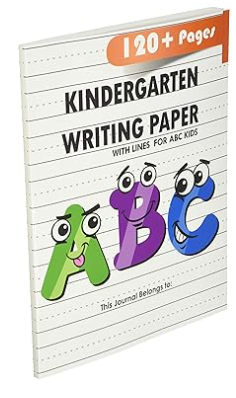
Ready for daily practice?
Our bound handwriting book gives 122 pages of trace-then-write practice for ages 4 to 6. Rated 4.8 by 12,478 families.