Handwriting Workbook vs. Free Printables: Which Is Better for Kids?
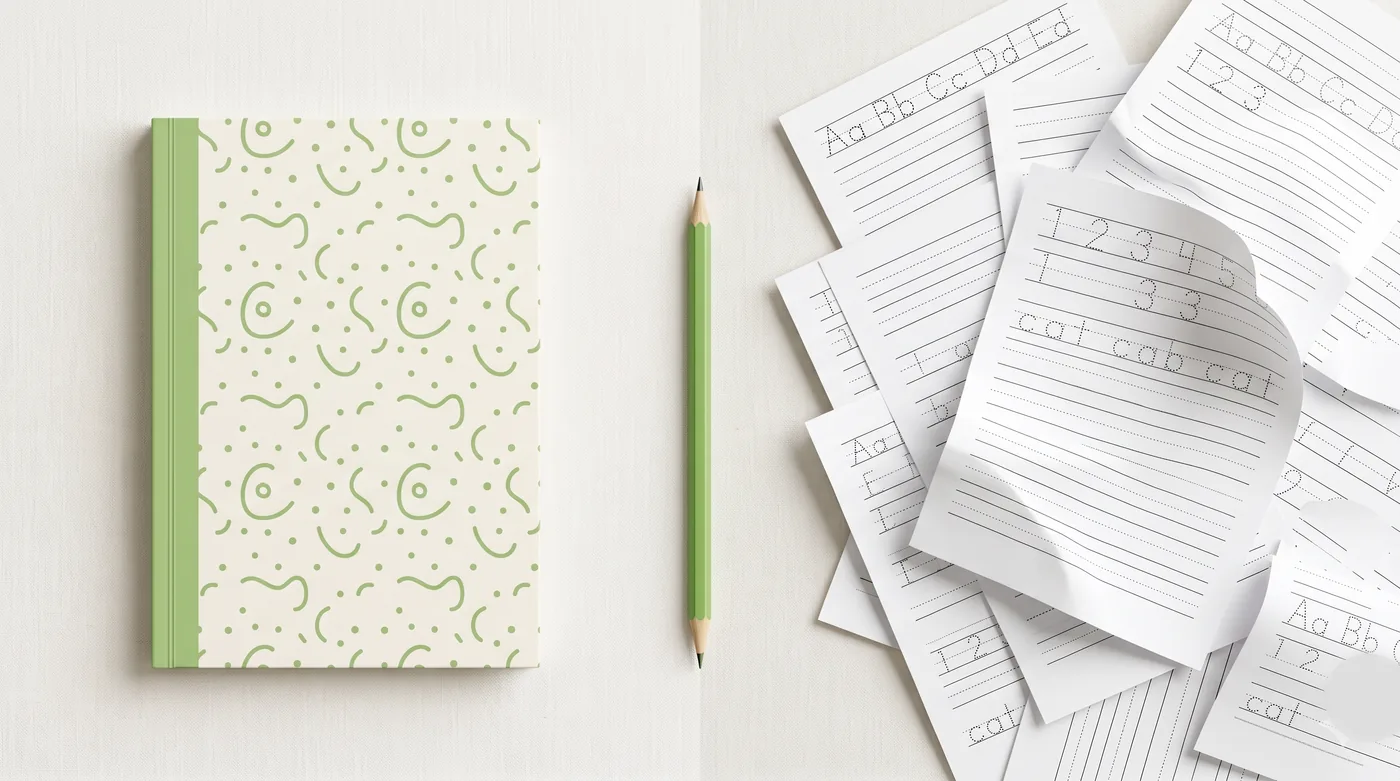
Free printables are great for a quick, single page and cost nothing. A bound handwriting workbook is the better choice for steady daily practice: there is nothing to print or organize, the thick paper does not bleed or tear, the lined guides stay consistent, and the trace-then-write pages build in order. For most families practicing regularly, the book wins.
TL;DR
- Printables are free and instant, perfect for one page or testing interest.
- “Free” printables still cost ink, paper, and daily effort that add up.
- A bound workbook means nothing to print, organize, or reorder.
- Thick workbook paper does not bleed or tear; printer paper often does.
- For steady daily practice, the bound book is the lower-effort choice.
You can find a thousand free handwriting printables online in about ten seconds, so why would anyone pay for a book? It is a fair question. This is an honest comparison, not a sales pitch, and it gives printables their full due before making the case for a bound book.
Are free printables good for handwriting practice?
Yes, free printables have genuine strengths, and any fair comparison starts there. They cost nothing, you can find a sheet for any letter in seconds, and you can reprint a tricky page as often as needed. For testing whether a child is interested in writing yet, a free printable is a smart, no-risk start.
They are also flexible. Need only the letter “S” today? Print that one page and move on.
What are the hidden costs of free printables?
The catch is that “free” is not the same as “no cost.” Daily practice means a fresh page every single day, which means living at the printer, and home printing is rarely as cheap as it feels. The real costs show up quietly over a full school term, not on the first day.
◆ VERIFIED: Consumer Reports found that inkjet ink is one of the most expensive liquids you can buy, and that with many printers more than half the ink never reaches the page. Source: Just Tech, citing Consumer Reports
- You reprint constantly. A new page every day is a small chore that never ends.
- Ink adds up. Home printing runs roughly 5 to 10 cents per page in black and white and more in color once ink and paper are counted [1], and ink is one of the priciest liquids in your house [2].
- Loose-sheet chaos. Single sheets scatter, crumple, and get lost, with no order and nothing to flip back through.
- Quality varies. Line spacing and letter shapes differ from one free source to the next, which confuses a child still learning what a letter should look like.
- Thin printer paper. Standard home paper bends, tears under an eager pencil, and bleeds with markers.
What do you get with a bound handwriting workbook?
A bound workbook trades that ongoing effort for one simple purchase. You open it and go: no printer, no loose sheets, no daily setup. Our bound handwriting workbook puts 122 pages of consistent, thick-paper practice in one place, in the exact order a child should work through them.
Here is what that buys you:
- Nothing to print or organize. One book, in order, no printer and no loose sheets.
- Thick paper that does not bleed or tear, so pencils do not rip through and markers do not bleed.
- Consistent dotted-midline and solid-baseline guides on every page, which help a child size letters and tell tall letters from short ones [3].
- A structured trace-then-write progression: trace the dotted letter first, then write it alone, uppercase and lowercase.
- A full term in one book: 122 pages, ages 4 to 6, 8.5 x 11 inches.
- Proven by families: 4.8 stars from 12,478 ratings.
- One price: $9.99 for the paperback. A spiral-bound edition also exists at $32.99 for parents who prefer lay-flat binding.
How do printables and a workbook compare side by side?
Here is the honest head-to-head, dimension by dimension. Printables win on upfront cost and flexibility, while the workbook wins on effort, durability, consistency, and structure. Neither is wrong: they simply fit different needs, so the right pick depends on how often your child will actually practice.
| What matters | Free printables | Bound workbook |
|---|---|---|
| Upfront cost | Free | $9.99 |
| Ongoing cost | Ink and paper, every page | None after purchase |
| Effort | Find, print, organize daily | Open and go |
| Paper quality | Thin, can bleed and tear | Thick, no bleed, no tear |
| Consistency of guides | Varies by source | Same dotted midline every page |
| Structure | You assemble it | Trace then write, built in order |
| Tracking progress | Loose sheets | Flip back through one book |
| Best for | A quick single page | Steady daily practice |
What do parents say about the workbook?
Parents keep returning to the same two things: the paper and the binding. One reviewer, Cee H, writes that the paper is thick enough that her child can write on it and it will not bend. Another parent, Coplansky, notes that pencils do not rip through and markers do not bleed, even with four young children using it.
Sienna’s Mom sums up the quality: “The binding is great and I love the glossy cover. The printing of the lines and dotted lines is very clear.”
So which should you choose?
Choose free printables if you only need an occasional page or you are still testing your child’s interest. Choose the bound workbook if you want steady daily practice without the printer, the loose sheets, and the ink cost. For most families who practice regularly, the workbook is the lower-effort, more durable, more consistent choice.
If you are not sure your child is ready to start at all, our handwriting readiness checklist walks through the signs. And it is worth getting the pencil grip right first, because grip comes before letters. Whichever you choose, pair it with a clear method for teaching writing.
Want to try the approach before you spend anything? Grab our free Activity Pages for Toddlers, 26 tracing pages and 26 coloring pages, delivered by email. It is a genuine try-before-you-buy.
What do parents ask about workbooks vs printables?
These are the questions parents weigh most when deciding between printing their own pages and buying a bound book. The short answers below cover whether workbooks are worth it, the true cost of printing, whether free sheets work just as well, and how to keep daily practice organized and consistent.
Are handwriting workbooks worth it?
For steady daily practice, yes. A bound workbook removes the daily printing, the loose-sheet mess, and the ink cost, and it gives consistent lined guides and a structured trace-then-write order. If you only need an occasional single page, a free printable can be enough.
Is it cheaper to print handwriting worksheets or buy a book?
Printables look free, but daily practice means ongoing ink and paper, which runs roughly 5 to 10 cents a page and climbs in color [1]. A bound workbook is a single $9.99 purchase with 122 pages, no printing, and nothing to reorder. For a full term of daily practice, the book is usually the cheaper path.
Do free printables work as well as a workbook?
They can teach the same letters, but quality and line spacing vary from source to source, the thin paper can bleed and tear, and you have to assemble the order yourself. A workbook gives consistent guides, thicker paper, and a built-in progression, which makes daily practice far easier to stick with.
How do I keep handwriting practice organized?
Loose printable sheets scatter and get lost, so many parents end up wrangling a binder or folder. A bound workbook solves this by design: every page is in order in one book, so you can flip back to see how a child’s letters have improved over time.
What is the best paper for kids’ handwriting practice?
Thick paper with a clear solid baseline and a dotted midline works best. The dotted midline helps a child size letters and tell tall letters from short ones [3], and thick paper does not bleed with markers or tear under a heavy pencil. Standard thin printer paper tends to bend and bleed.
Sources and references
- “Printing Costs: How to Accurately Calculate Your Printing Cost Per Page.” Toner Buzz. https://www.tonerbuzz.com/blog/printing-costs/
- “Printer Ink, The Most Expensive Liquid You Buy” (citing Consumer Reports). Just Tech. https://justtech.com/printer-ink-the-most-expensive-liquid-you-buy/
- “Free Printable Lined Writing Paper for Kindergarten and Primary Students.” We Are Teachers. https://www.weareteachers.com/lined-kindergarten-writing-paper/
Written by Smith John, founder of Tiny Writers Co and author of “Kindergarten Writing Paper with Lines for ABC Kids.” Cost figures are general estimates from the printing-cost sources above and vary by printer and region.
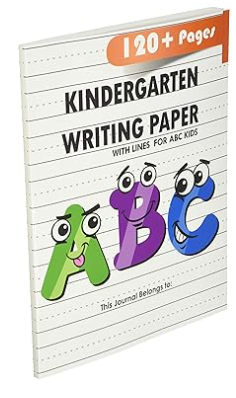
Ready for daily practice?
Our bound handwriting book gives 122 pages of trace-then-write practice for ages 4 to 6. Rated 4.8 by 12,478 families.